
Nearly fifty years of keeping languages in the room.
IHLA began in 1977 when the teachers of Alberta's scattered “weekend schools” met each other for the first time. They have not stopped meeting since.
Behind every community school in the network.
IHLA is a non-profit umbrella organization for community-based heritage and international language schools. Our members are principals, teachers, teaching assistants, administrative staff and parent volunteers, running programs for learners from preschool through to adults.
Our work follows three long-standing commitments:
- Supporting and promoting heritage language education in the communities that sustain it.
- Developing curriculum, teaching resources and materials that no single volunteer school could produce alone.
- Training heritage language teachers and building their professional skills, credentials and confidence.
Underneath all three sits a simple conviction: that learning an international or inherited language increases respect for Canada's multiculturalism, and that the multilingualism already present in our classrooms is a national resource rather than a curiosity.
Why “heritage” and “international”
The organization was founded to serve inherited languages — the ones spoken at home, at risk of thinning out by the second or third generation. Over time the same schools began teaching those languages to learners with no family connection at all. The 2003 name change acknowledged both: a heritage language for one student is an international language for the one sitting beside them.
IHLA works in amiskwacîwâskahikan — Beaver Hills House, the city now called Edmonton — on Treaty 6 territory, and within the Métis homeland and Métis Nation of Alberta Region 4.
We acknowledge this as the traditional territory of the many First Nations whose ancestors' footsteps have marked this land for centuries: the nêhiyaw (Cree), Denesłiné (Dene), Nakota Isga (Nakota Sioux), Anishinaabe (Saulteaux) and Niitsitapi (Blackfoot). Edmonton is also home to one of the largest Inuit communities south of the 60th parallel.
This is not a formality for an organization whose whole work is language. The Indigenous languages of this territory were not lost by accident — they were suppressed by policy, and children were punished for speaking them. Keeping a heritage language alive across an ocean is not the same as recovering one that was taken here, and we do not claim that it is. We are grateful to the Indigenous educators who have taught in our professional development programme, and we recognise that the work of language revitalization on this land began long before IHLA did, and continues in hands other than ours.
From a single conference to a provincial network
- 1977
A grant from the Canadian Consultative Council on Multiculturalism funds a provincial conference for Alberta's “weekend schools” — the first time teachers working in isolation meet one another. They decide to keep going.
- 1978
The group incorporates as the Alberta Ethnic Language Teachers Association (AELTA) on 10 August, an Alberta non-profit company.
- 1980s–90s
The association becomes the Northern Alberta Heritage Language Association (NAHLA), building teacher training, curriculum support and a province-wide network of member schools.
- 2003
NAHLA is renamed the International and Heritage Languages Association — recognising that the schools now teach world languages as well as inherited ones.
- 2004
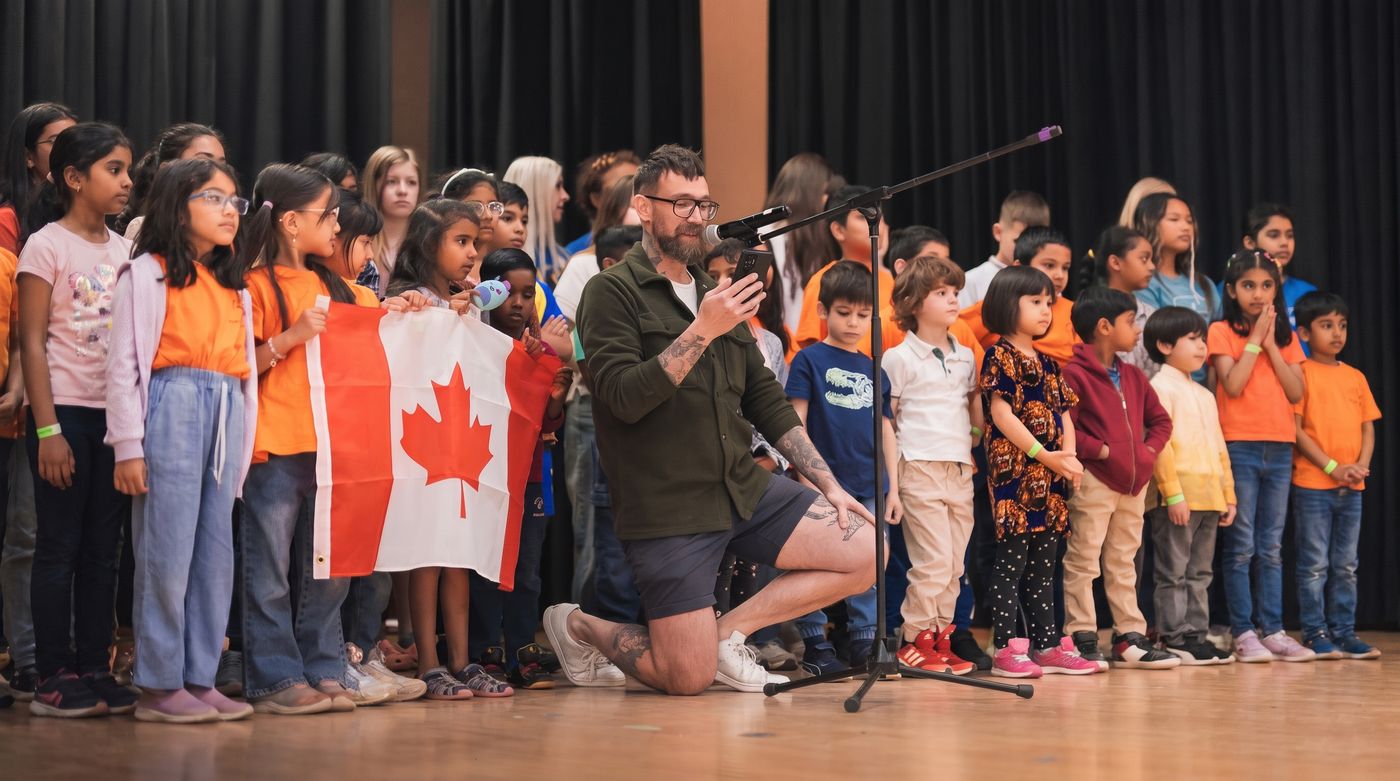
The first Mother Language Day showcase is held, following UNESCO's designation of 21 February as International Mother Language Day.
- 2016
IHLA receives the Linguapax Award, shared with the Yambirrpa Schools / Djarrma Action Group of Australia — an international recognition rarely given to a volunteer-run community network.
- 2020–22
Member schools move online overnight. Researchers document how twenty-five IHLA schools sewed masks, cooked meals, translated public health information and ran blood drives for their communities.
- Today
19 languages are taught each weekend across the network, from preschool to adult learners, by teachers who are mostly volunteers.

The 2016 Linguapax Award
Given annually by Linguapax International for outstanding contributions to linguistic diversity and multilingual education.
The jury cited the “perseverance and the will to preserve languages that are either threatened” or belong to displaced populations. IHLA was recognised for three things in particular: advocating that heritage language skills be formally recognised and accredited in high schools; pressing for the professional backgrounds of heritage language teachers to be acknowledged in Canada; and building public awareness — among young people, citizens and policymakers — of what multilingualism is worth.
IHLA has also contributed to the International Guidelines for Professional Practices in Community-Based Heritage Language Schools, developed with colleagues in the Netherlands, Iceland, Ireland and the United States.
The newsletter, and the book
IHLA has published a newsletter every quarter since 2003 — now past its twenty-first volume. It is written largely by the schools themselves: what they ran, who taught, which festival they marked, which problem they solved. Taken together the run is the closest thing the network has to an archive of its own history.
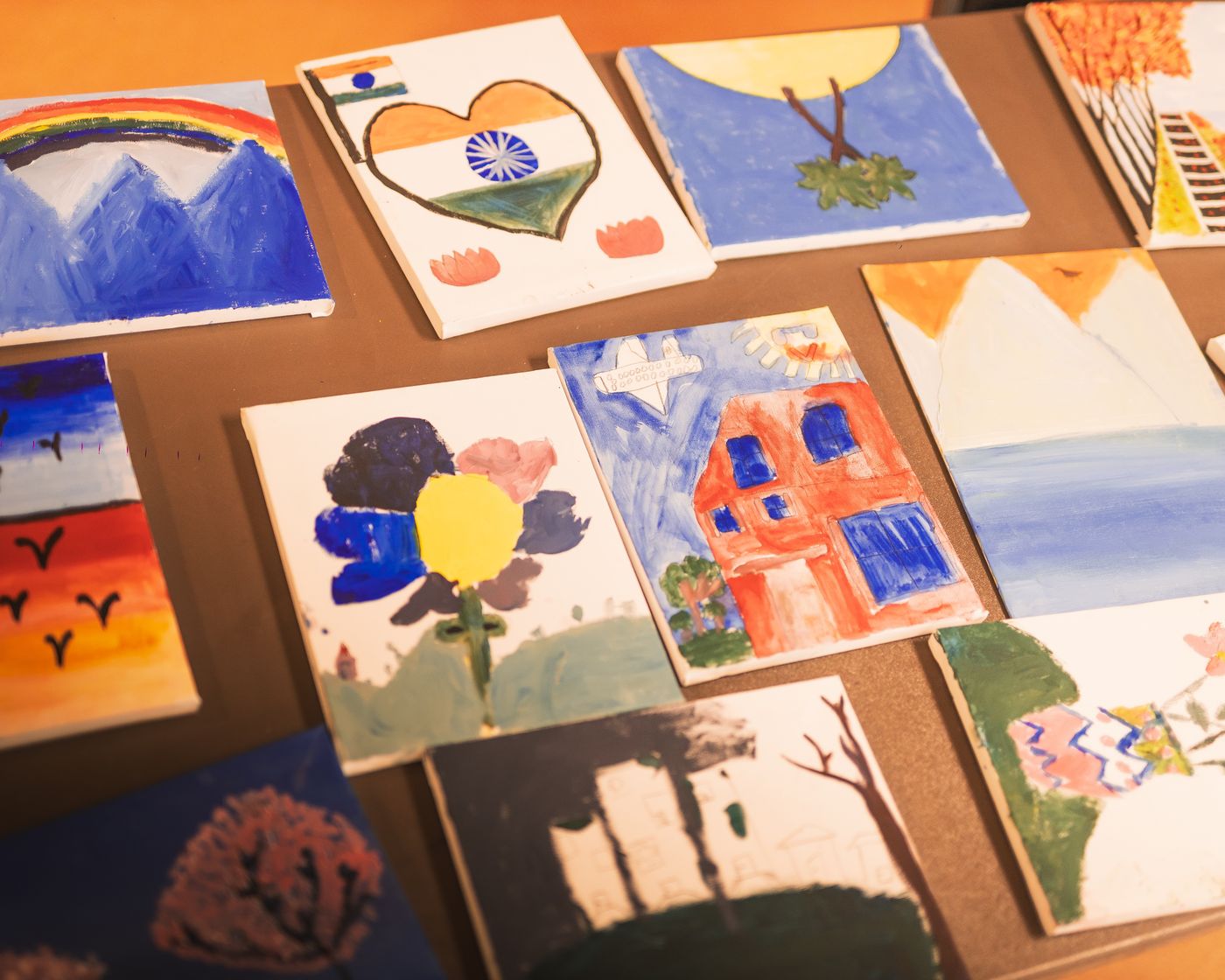
Alongside it, the annual Mother Language Day book collects student writing, translation and artwork from across the membership, in the students' own languages and scripts. For many families it is the first time they have seen their child's writing set in print in the language their grandparents use.
Every issue from Volume 1 in 2003 to the present is below — 58 of them — and the Mother Language Day books are on the Events page.
The newsletter, 2003 to today
58 issues across 21 volumes, written largely by the member schools themselves.
Reference list
- DocumentReference list on IHLA and its communitiesAcademic and published writing about the network.Open
Who runs IHLA
Konstantinos (Kostas) Koukouzikis
Hellenic Heritage Language School
Francis Wambugu
Kiswahili Learning Centre
Paylig Oltadjian
Armenian Culture and Educational Association
Kuljeet Kaur
Ramgarhia Khalsa School
Tetyana Adamyk
Ivan Franko School of Ukrainian Studies
Sasidevi Caster
Edmonton Tamil School
Archana Gautam Kumar
Alberta Aspire Association
Alaknanda Rai
Alberta Hindi Parishad
Life members
Josephine Pallard · Jaspal Bansal · Krystyna Dembowski
Board for the 2026/27 term.
Who stands behind the network
Funders
Alberta Education · Alberta Gaming, Liquor and Cannabis · Alberta Association for Multicultural Education · Alberta Interscience Association · member school fees
Affiliations
Canadian Languages Association / Association Canadienne des Langues · Linguapax International · Edmonton Intercultural Centre · sister associations in British Columbia, Saskatchewan, Ontario and Québec
Academic partners
University of Alberta, Department of Secondary Education · Athabasca University · the international working group behind the Guidelines for Professional Practices in Community-Based Heritage Language Schools
Where IHLA has been written and talked about
- ArticleHow heritage language schools offered grassroots community support through the pandemicThe ConversationRead
- PodcastCelebrating our languages — Antonella Cortese and IHLAIt's About Language, episode 95Listen
- PodcastYoung voices from Mother Language DayIt's About Language, episode 96Listen
- PodcastChildren celebrate their heritageIt's About Language, episode 97Listen
- PodcastInternational collaborationsIt's About Language, episode 63Listen
Your language belongs in this collection.
Whether you are looking for a Saturday class for your child, running a school that could use a network behind it, or teaching a language you love — there is a way in.